When your art is recorded on a blockchain, the system adds a timestamp. A timestamp shows the exact date and time when an event happened, sometimes down to a fraction of a second. The blockchain also records transaction details, such as when the sale or trade happened and what was paid.
Cryptography: Blockchain Technology – Tameka Art
Blockchain keeps a record of digital assets using a tool called cryptography. You may think of cryptography as a secure lock and signature combined. It scrambles information so that it cannot be changed without the right key.
When your art is recorded on a blockchain, the system adds a timestamp. A timestamp shows the exact date and time when an event happened, sometimes down to a fraction of a second.
The blockchain also records transaction details, such as when the sale or trade happened and what was paid.
In summary, when art is sold or traded on a blockchain, it creates a permanent, time stamped record that helps prove what happened and when, which supports trust and protection for your artwork.
Early Access to Traditional Art Meets Technology – Tameka Art
Many traditional artists think NFTs will replace their original art. This is not true.
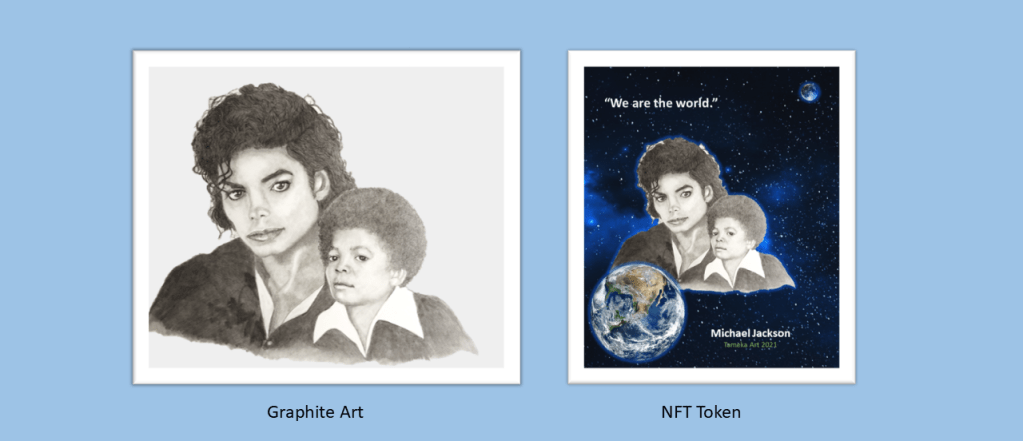
NFTs do not replace your original drawings or paintings. They create a digital record that says, “This artwork is real, and this artist owns it.”
For traditional artists, that means:
- Clear proof of authorship
- A way to present your work to a global audience
- A bridge between your studio and the digital world
If you want gentle, step by step guidance through wallets, blockchain, smart contracts, and minting in plain language, my course “Traditional Art Meets Technology” is open for early access.
Learn more and enroll here:
https://courseone.tamekaartnfts.com/courses/offers/96e833da-7353-444b-ba6c-9d3ba5e99c9d
Early Access is Now Opened – Tameka Art
Many traditional artists are interested in digital assets but lack gentle, clear guidance they can trust. Traditional artists deserve a safe and thoughtful path into the digital world.
I have opened early access enrollment for “Traditional Art Meets Technology,” a step-by-step course that helps traditional artists protect and present their work as digital assets without tech jargon or hype. The lessons explain digital wallets, cryptocurrency, blockchain, and minting in clear language for artists, not programmers.
If you or your students are exploring how traditional artwork can live safely in digital spaces, you may learn more and enroll here: https://courseone.tamekaartnfts.com/courses/offers/96e833da-7353-444b-ba6c-9d3ba5e99c9d
Your art deserves a safe home in the digital world – Tameka Art
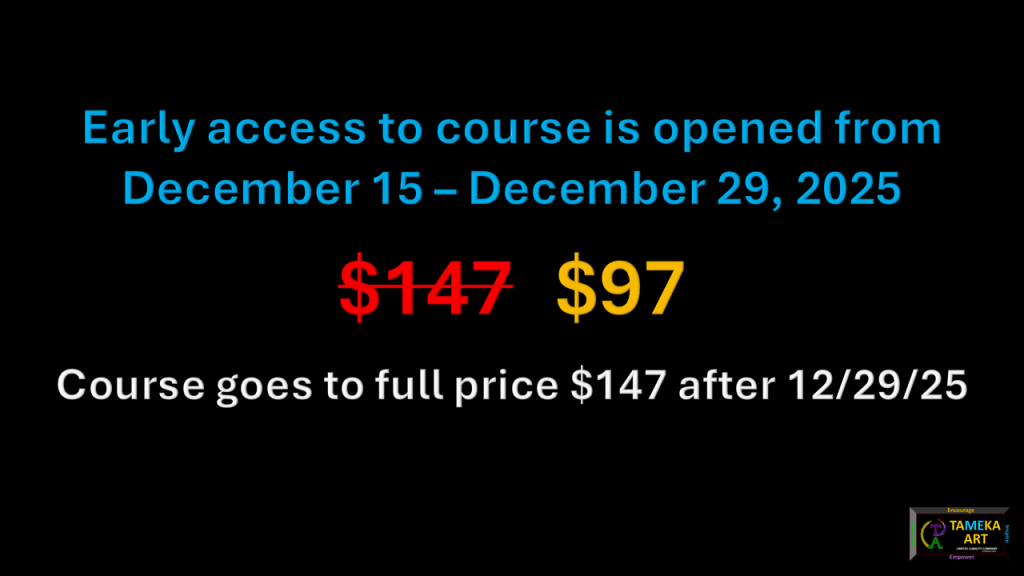
I created “Traditional Art Meets Technology” for traditional artists who feel left behind by digital jargon but still feel called to protect and share their artwork in the modern world. This course gently guides you through digital wallets, cryptocurrency, blockchain, smart contracts, and step-by-step minting, all in clear language for artists, not programmers. This post introduces the early access launch, open from December 15 – December 29, 2025 at a founding artist price of $97 (regular $147) with a 10-day money back guarantee, so you may explore the digital future of your art without risk.
From Pencil to Preservation: A New Chapter for Traditional Artists – Tameka Art
For decades, you have created with intention. Each line has carried emotion. Each stroke has told a story. Traditional art holds history, memory, and identity. Yet today’s digital world presents both opportunity and risk.
Unprotected digital platforms expose artists to theft, misuse, and loss. Many artists choose avoidance because the technology feels too complex. This hesitation is understandable, but it must not become a barrier to growth.
A new chapter awaits. One rooted in knowledge, safety, and empowerment.
Digital assets allow your original work to live securely online with verified ownership and long-term protection. Smart contracts provide clarity. Blockchain creates transparency. Simplicity replaces confusion when guidance is clear and supportive.
You deserve more than visibility. You deserve security and respect.
This transition does not erase tradition. It amplifies it. Your hands still create. Your soul still guides the process. Technology simply ensures that your work remains yours, now and for generations to come.
Your journey forward begins with understanding. Confidence begins with education. Empowerment begins with choice.
Begin your journey with guidance designed for artists. Join Traditional Art Meets Technology: Creating Art as a Digital Asset and learn how to preserve your work and expand your reach with confidence and power.
https://courseone.tamekaartnfts.com/courses/offers/96e833da-7353-444b-ba6c-9d3ba5e99c9d.
Your Art Has a Future That Deserves Protection

Subscribe to continue reading
Subscribe to get access to the rest of this post and other subscriber-only content.
Animation/Illustration Services
Animation
Illustrations
What Does It Mean to Mint Art as an NFT? – Tameka Art
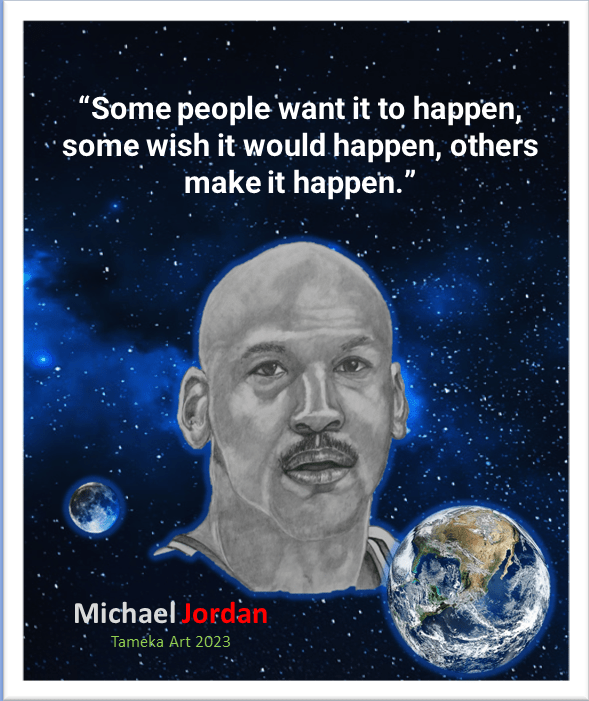
Minting art as an NFT means publishing your digital artwork to a blockchain, which creates a verifiable, unchangeable token that represents the work. Unlike simply posting an image on a platform, minting grants the piece an official history, authenticity, and ownership traceability that only blockchain can provide.
What does “minting” an NFT mean?
- Publishing on the blockchain: Minting transforms your digital file (image, video, music, etc.) into an NFT—by embedding it into a smart contract on the blockchain. This process gives it a unique identifier and makes it part of a public, permanent ledger. (NFT.com, learn.opensea.io, BuiltwithNFT.org)
- Establishing verifiable authenticity and ownership: The person minting becomes the first owner of the object on the blockchain. Once minted, the NFT’s ownership history is immutable and publicly accessible. (Techopedia, learn.opensea.io)
- Embedding metadata and optional functionality: During the minting process, creators assign metadata (title, description, creator info, rarity, and royalty details) that defines the asset and its future behavior (e.g., creator royalties). (Blockchain Council, BuiltwithNFT.org, Robots.net)
Why mint artwork instead of simply posting it?
| Benefit | Explanation |
| Proof of authenticity & provenance | Only minted NFTs are tied to a blockchain record that verifies who created and currently owns the work. (BuiltwithNFT.org, learn.opensea.io, Techopedia) |
| Scarcity & uniqueness | Minting registers a specific, non-fungible token. A one-of-a-kind asset or limited-edition item. (Medium, Techopedia) |
| Monetization & royalties | Minting enables direct sales and, thanks to smart contracts, automatic royalty payments when NFTs are resold. (BuiltwithNFT.org, Facelightfinance) |
| Decentralized control | NFTs live independently of centralized platforms. You truly “own” your token, and it remains verifiable even if the platform changes. (Facelightfinance, learn.opensea.io) |
| Marketplace integration | Only minted NFTs can be listed, sold, or transferred on blockchain-based platforms. Mere postings do not integrate into a blockchain’s ecosystem. (learn.opensea.io, NFTgators) |
Here is how trusted platforms describe minting:
- Techopedia defines minting as recording a unique digital asset on the blockchain, establishing immutable provenance, and making the minter the original owner. (Techopedia)
- OpenSea’s glossary emphasizes that minting creates an immutable record of authenticity and ownership. Something that ordinary images cannot claim. (learn.opensea.io)
- Blockchain Council notes that minting involves smart contracts to store metadata and ownership, and ensures uniqueness and traceability of the NFT. (Blockchain Council)
- BuiltwithNFT.org explains that minting ties the file to a smart contract, makes it publicly traceable, and allows setting royalty rules or unlockable content. (BuiltwithNFT.org)
Bottom line
Minting is not just a fancy term for uploading art. It is a deliberate act that:
- Registers your artwork on an immutable, transparent ledger.
- Confers proof of authenticity and documented ownership.
- Enables monetization with royalties.
- Connects your art to the broader NFT ecosystem, thus making it tradeable, ownable, and verifiable.
Without minting, a digital image remains just a digital image. An image that is easy to copy or screenshot and lacks the blockchain credentials that define NFTs.
Ready to learn more?
Explore my all-in-one course, Traditional Art Meets Technology, and start your journey into NFTs today.
Subscribe to my website to stay updated on the latest tips, news, and tools for artists who are ready to grow in the digital world.
Top 10 Ways to Digitize Art for NFT Uploads – Tameka Art
1. High-resolution photography
Use a quality camera to capture your physical artwork under even, neutral lighting. Avoid glare and shadows. You can take a picture at a high resolution to preserve details, then edit for clarity using tools like Photoshop or Procreate.
Community tip:
“Take photo and edit with Procreate.” (Reddit)
2. Professional scanning or 3D scanning
Flat artworks benefit from high-quality flatbed scanning (300 DPI or higher). Sculptures or textures might require 3D scanning or photogrammetry to capture depth and perspective. These methods yield crisp digital assets for NFT minting.
3. Cleaning & editing with Photoshop or Illustrator
After capture, refine the image remove backgrounds, clean rough edges, enhance colors, and vectorize if needed using Adobe Photoshop or Illustrator. These edits ensure your artwork looks polished and platform-ready. (Adobe)
4. Use of mobile art apps (Procreate, GoART, SketchAR)
- Procreate (iPad) is ideal for touch-ups, coloring, or shading captured images.
- GoART uses AI to stylize images and includes built-in NFT minting tools.
- SketchAR offers AR & AI-assisted drawing, NFT templates, and minting support. (NFT Monk)
5. Ensure proper file formats & resolution
Export your digitized artwork in NFT-friendly formats like PNG, JPEG, GIF, SVG for images; MP4 for videos; ensure at least 300 DPI resolution for clarity. Match the size requirements for your chosen marketplace. (CCN.com, Fiverr.com)
6. Add content credentials or metadata
Embed metadata into your file (title, description, date, artist details, provenance) directly or within the NFT’s metadata layer. Adobe tools can help include content credentials that support authenticity. (Adobe, NFT Digitizer)
7. Create comprehensive metadata
When minting, complete metadata fields such as:
- Artwork title, description, creation date
- Artist statement or short biography
- Physical details (dimensions, medium)
- Provenance or authenticity notes
- Optional: unlockable content (e.g., high-res downloads, bonuses)
Such metadata supports discoverability and authenticity. (NFT Digitizer)
8. Mint via lazy or direct upload
Connect your crypto wallet (e.g., MetaMask), choose a supported blockchain (Ethereum, Polygon, Solana), and upload your digitized file. Some platforms offer “lazy minting,” where gas fees apply only on sale. (NFT Digitizer, Fiverr.com, BlockTech Solutions)
9. Use IPFS or Pinata for file hosting
Rather than uploading files directly to marketplaces, consider hosting your artwork on decentralized storage such as IPFS or Pinata. Then include the content ID (CID) in your NFT’s metadata for a secure, permanent record. (Reddit)
10. Engage with community & avoid scams
Join NFT communities on Discord, Twitter (X), or Reddit. Share your creative process, ask questions, and notify peers when your art is live. Beware of offers that ask you to pay upfront for “digitizing” artworks. You can do most steps yourself. Besides, your work is already digital if it appears on the computer screen. (Reddit)
Summary Table
| Step | Method | Benefits |
| 1 | High-res photography | Captures detail from physical artworks |
| 2 | Professional / 3D scanning | Ideal for depth, texture, or precision |
| 3 | Photoshop / Illustrator editing | Cleans and polishes digital image |
| 4 | Mobile art tools (Procreate, GoART, SketchAR) | Stylizes and prepares for quick minting |
| 5 | Correct file format & resolution | Ensures NFT marketplace compatibility |
| 6 | Content credentials & metadata embedding | Adds provenance and traceability |
| 7 | Comprehensive metadata during minting | Improves visibility and authenticity |
| 8 | Mint via wallet; consider lazy minting | Streamlines minting & reduces early costs |
| 9 | Host art via IPFS / Pinata | Preserves integrity and permanence |
| 10 | Join communities & stay vigilant | Gain support and avoid scams |
Sources
- Photoshop, Illustrator, metadata guidance: (Adobe)
- Mobile apps (GoART, SketchAR): (NFT Monk)
- File types and size insights: (CCN.com, Fiverr.com)
- Metadata details: (NFT Digitizer)
- Minting process & lazy minting: (NFT Digitizer, Fiverr.com, BlockTech Solutions)
- IPFS / Pinata hosting: (Reddit)
- Community advice & scam awareness: (Reddit)
Ready to learn more?
Explore my all-in-one course, Traditional Art Meets Technology, and start your journey into NFTs today.
Subscribe to my website to stay updated on the latest tips, news, and tools for artists who are ready to grow in the digital world.
 Believe Like a Child; Draw Like an Artist