For decades, you have created with intention. Each line has carried emotion. Each stroke has told a story. Traditional art holds history, memory, and identity. Yet today’s digital world presents both opportunity and risk.
Unprotected digital platforms expose artists to theft, misuse, and loss. Many artists choose avoidance because the technology feels too complex. This hesitation is understandable, but it must not become a barrier to growth.
A new chapter awaits. One rooted in knowledge, safety, and empowerment.
Digital assets allow your original work to live securely online with verified ownership and long-term protection. Smart contracts provide clarity. Blockchain creates transparency. Simplicity replaces confusion when guidance is clear and supportive.
You deserve more than visibility. You deserve security and respect.
This transition does not erase tradition. It amplifies it. Your hands still create. Your soul still guides the process. Technology simply ensures that your work remains yours, now and for generations to come.
Your journey forward begins with understanding. Confidence begins with education. Empowerment begins with choice.
Begin your journey with guidance designed for artists. Join Traditional Art Meets Technology: Creating Art as a Digital Assetand learn how to preserve your work and expand your reach with confidence and power.
Minting art as an NFT means publishing your digital artwork to a blockchain, which creates a verifiable, unchangeable token that represents the work. Unlike simply posting an image on a platform, minting grants the piece an official history, authenticity, and ownership traceability that only blockchain can provide.
What does “minting” an NFT mean?
Publishing on the blockchain: Minting transforms your digital file (image, video, music, etc.) into an NFT—by embedding it into a smart contract on the blockchain. This process gives it a unique identifier and makes it part of a public, permanent ledger. (NFT.com, learn.opensea.io, BuiltwithNFT.org)
Establishing verifiable authenticity and ownership: The person minting becomes the first owner of the object on the blockchain. Once minted, the NFT’s ownership history is immutable and publicly accessible. (Techopedia, learn.opensea.io)
Embedding metadata and optional functionality: During the minting process, creators assign metadata (title, description, creator info, rarity, and royalty details) that defines the asset and its future behavior (e.g., creator royalties). (Blockchain Council, BuiltwithNFT.org, Robots.net)
Minting registers a specific, non-fungible token. A one-of-a-kind asset or limited-edition item. (Medium, Techopedia)
Monetization & royalties
Minting enables direct sales and, thanks to smart contracts, automatic royalty payments when NFTs are resold. (BuiltwithNFT.org, Facelightfinance)
Decentralized control
NFTs live independently of centralized platforms. You truly “own” your token, and it remains verifiable even if the platform changes. (Facelightfinance, learn.opensea.io)
Marketplace integration
Only minted NFTs can be listed, sold, or transferred on blockchain-based platforms. Mere postings do not integrate into a blockchain’s ecosystem. (learn.opensea.io, NFTgators)
Here is how trusted platforms describe minting:
Techopedia defines minting as recording a unique digital asset on the blockchain, establishing immutable provenance, and making the minter the original owner. (Techopedia)
OpenSea’s glossary emphasizes that minting creates an immutable record of authenticity and ownership. Something that ordinary images cannot claim. (learn.opensea.io)
Blockchain Council notes that minting involves smart contracts to store metadata and ownership, and ensures uniqueness and traceability of the NFT. (Blockchain Council)
BuiltwithNFT.org explains that minting ties the file to a smart contract, makes it publicly traceable, and allows setting royalty rules or unlockable content. (BuiltwithNFT.org)
Bottom line
Minting is not just a fancy term for uploading art. It is a deliberate act that:
Registers your artwork on an immutable, transparent ledger.
Confers proof of authenticity and documented ownership.
Enables monetization with royalties.
Connects your art to the broader NFT ecosystem, thus making it tradeable, ownable, and verifiable.
Without minting, a digital image remains just a digital image. An image that is easy to copy or screenshot and lacks the blockchain credentials that define NFTs.
Use a quality camera to capture your physical artwork under even, neutral lighting. Avoid glare and shadows. You can take a picture at a high resolution to preserve details, then edit for clarity using tools like Photoshop or Procreate.
Flat artworks benefit from high-quality flatbed scanning (300 DPI or higher). Sculptures or textures might require 3D scanning or photogrammetry to capture depth and perspective. These methods yield crisp digital assets for NFT minting.
3. Cleaning & editing with Photoshop or Illustrator
After capture, refine the image remove backgrounds, clean rough edges, enhance colors, and vectorize if needed using Adobe Photoshop or Illustrator. These edits ensure your artwork looks polished and platform-ready. (Adobe)
4. Use of mobile art apps (Procreate, GoART, SketchAR)
Procreate (iPad) is ideal for touch-ups, coloring, or shading captured images.
GoART uses AI to stylize images and includes built-in NFT minting tools.
SketchAR offers AR & AI-assisted drawing, NFT templates, and minting support. (NFT Monk)
5. Ensure proper file formats & resolution
Export your digitized artwork in NFT-friendly formats like PNG, JPEG, GIF, SVG for images; MP4 for videos; ensure at least 300 DPI resolution for clarity. Match the size requirements for your chosen marketplace. (CCN.com, Fiverr.com)
6. Add content credentials or metadata
Embed metadata into your file (title, description, date, artist details, provenance) directly or within the NFT’s metadata layer. Adobe tools can help include content credentials that support authenticity. (Adobe, NFT Digitizer)
7. Create comprehensive metadata
When minting, complete metadata fields such as:
Artwork title, description, creation date
Artist statement or short biography
Physical details (dimensions, medium)
Provenance or authenticity notes
Optional: unlockable content (e.g., high-res downloads, bonuses) Such metadata supports discoverability and authenticity. (NFT Digitizer)
8. Mint via lazy or direct upload
Connect your crypto wallet (e.g., MetaMask), choose a supported blockchain (Ethereum, Polygon, Solana), and upload your digitized file. Some platforms offer “lazy minting,” where gas fees apply only on sale. (NFT Digitizer, Fiverr.com, BlockTech Solutions)
9. Use IPFS or Pinata for file hosting
Rather than uploading files directly to marketplaces, consider hosting your artwork on decentralized storage such as IPFS or Pinata. Then include the content ID (CID) in your NFT’s metadata for a secure, permanent record. (Reddit)
10. Engage with community & avoid scams
Join NFT communities on Discord, Twitter (X), or Reddit. Share your creative process, ask questions, and notify peers when your art is live. Beware of offers that ask you to pay upfront for “digitizing” artworks. You can do most steps yourself. Besides, your work is already digital if it appears on the computer screen. (Reddit)
According to MONEY’s “8 Best Crypto Wallets of September 2025,” the top picks include (Money):
Exodus – Best overall crypto wallet
ZenGo – Best for beginners
Sparrow – Best for Bitcoin
BlueWallet – Best mobile Bitcoin wallet
Trust Wallet – Best mobile crypto wallet
MetaMask – Best Web3 wallet
Additionally, RocketX outlines other leading hot wallets as the “Top 5 Crypto Wallets to Use in 2025” (RocketX Exchange):
Rabby Wallet – Multi-chain DeFi specialist
Phantom Wallet – NFT & Solana powerhouse
Zerion Wallet – Web3 portfolio dashboard
Keplr Wallet – Cosmos ecosystem & IBC expert
So, combining both lists, here’s a consolidated view:
Rank
Wallet Name
Specialization / Strength
1
Exodus
Overall best, multi-platform, easy swaps
2
ZenGo
Beginner-friendly, no seed phrase needed
3
Sparrow
Bitcoin-specific, desktop-focused
4
BlueWallet
Mobile-oriented, Bitcoin-focused
5
Trust Wallet
Broad mobile crypto support
6
MetaMask
Web3 and dApp integration
7
Rabby Wallet
DeFi & multi-chain management
8
Phantom Wallet
Solana & NFT-friendly interface
9
Zerion Wallet
Unified portfolio tracker for DeFi & NFTs
10
Keplr Wallet
Cosmos-native wallet for IBC interoperability
Top Hardware (Cold) Wallets
From MONEY’s “8 Best Crypto Wallets” list (Sep 2025) (Money):
Trezor Model One – Best entry-level hardware wallet
Ledger Nano Flex – Best high-end hardware wallet
From CoinLedger’s “9 Best Cold Storage Wallets 2025” (CoinLedger):
Tangem – Best overall cold storage wallet
Ledger Nano X – Best for beginners
Ledger Stax – Best design and user experience
Trezor Safe 3 – Best affordability
COLDCARD – Best for Bitcoin security
Cypherock X1 – Best multisignature security
NGRAVE Zero – Best for security & recovery
BC Vault ONE – Best cryptocurrency selection
D’CENT – Best biometric security
Also from NOWNodes’ “5 Best Cold Crypto Wallets in 2025” (Nownodes):
Ledger (general, includes Nano X and Nano S Plus)
Trezor (Model T, open-source, touchscreen)
ELLIPAL Titan 2.0 – Air-gapped with QR code support
D’Cent – Biometric authentication
BC Vault – Encrypted microSD backup
Consolidated Top Hardware Wallets Summary:
Wallet Name
Highlights / Strengths
Tangem
Best overall; NFC, air-gapped smartcard design
Ledger Nano X
Beginner-friendly, Bluetooth support, wide coin support
Ledger Stax
Premium design & UX
Ledger Nano Flex
High-end performance (per MONEY)
Trezor Model One
Entry-level, trusted brand
Trezor Safe 3
Affordable with open-source firmware
COLDCARD
Bitcoin-focused, hardened security
Cypherock X1
Multisig security capability
NGRAVE Zero
High security and recovery features
BC Vault ONE
Broad coin support with encrypted SD backups
ELLIPAL Titan 2.0
Fully air-gapped, rugged, QR authorization
D’Cent
Biometric security, fingerprint scanning
Sources Summary
MONEY (September 2025): Top hot wallets and two hardware wallet recommendations (Money).
CoinLedger (2025): Wide-ranging cold wallet rankings with context on best use cases (CoinLedger).
NOWNodes (May 2025): Additional cold wallet picks, including ELLIPAL, D’Cent, and BC Vault (Nownodes).
RocketX (2025): Emphasis on hot wallets for DeFi, NFT, and multi-chain use (RocketX Exchange).
FYI: Coinbase Wallet is one of the top digital wallets by user numbers and reputation. It did not make these specific lists because most reviewers favor non-custodial, Web3-native, multi-chain wallets that are not tied to a centralized exchange.
Here is a list of the top 10 trusted marketplaces, their overview, and their sources:
OpenSea
Overview: The largest and most widely used NFT marketplace, with support for multiple blockchains (Ethereum, Polygon, Solana, and others). Offers minting, auctions, fixed-price sales, and royalty support for creators. (Wikipedia, Internet Is Good, Creative Bloq, Koinize, GOBankingRates, DappRadar)
Magic Eden
Overview: Originally a Solana-focused marketplace, now supports Ethereum, Bitcoin, Polygon, Base, and more. Known for low fees, strong creator tools, and high trading volumes. (NFT Insider, Walletinvestor.com, Gov Capital, DappRadar)
Rarible
Overview: A community-governed, decentralized platform supporting Ethereum, Polygon, Tezos, Immutable X, and more. Known for its native token (RARI) and creator-friendly royalty features. (Forbes, nftclub.com, Koinize, Investopedia)
SuperRare
Overview: A curated, high-end digital art marketplace with selective listings, ideal for serious art collectors. Charges a 15% primary sale fee (plus a flat 3% buyer fee). (Forbes, Tech Sparkle, GOBankingRates)
Nifty Gateway
Overview: Known for exclusive drops from top artists, open editions, and credit card support. Acquired by Gemini. Great for high-profile NFT releases. (Forbes, nftclub.com, ZenLedger)
Foundation
Overview: An invite-only marketplace that curates high-quality digital art through 24-hour auctions. Supports Ethereum and attracts established creators. (Tech Sparkle, ZenLedger)
MakersPlace
Overview: Emphasizes authenticated digital art, with provenance and creator verification. Frequently listed alongside top marketplaces in curated lists. (nftclub.com, GOBankingRates, ZenLedger)
Mintable
Overview: User-friendly platform launched in 2018, offering gas-free minting and flexible fee structures. Popular among creators and beginners. (Tech Sparkle, nftclub.com, GOBankingRates)
Benchmarked by Popularity: Other trusted platforms commonly highlighted as key players include:
NBA Top Shot – Specialized in sports NFTs and moments. (Forbes, ZenLedger)
Binance NFT Marketplace
Overview: Run by cryptocurrency exchange Binance, supports multiple chains and offers a familiar trading interface for crypto users. Often included in trusted marketplace rankings. (Koinize, Investopedia)
Summary Table
Marketplace
Key Strengths
OpenSea
Largest, multi-chain, creator royalties
Magic Eden
Low fees, cross-chain support, creator tools
Rarible
Decentralized governance, broad chain support
SuperRare
Curated, premium digital art
Nifty Gateway
High-profile drops & credit card purchases
Foundation
Exclusive invite-only art auctions
MakersPlace
Verified digital art & provenance
Mintable
Gas-free minting, easy for new creators
Axie Marketplace
Game-centered NFTs
CryptoPunks (Larva Labs)
Iconic collectible series
NBA Top Shot
Sports-focused NFT moments
Binance NFT
Exchange-backed, multi-chain
Why These Platforms Are Trusted
Reputation & Longevity: Many have been operating since the early NFT boom (2017–2021), maintaining consistent user trust.
Security & User Base: Large user communities and integration with major wallets and exchanges.
Creator Support: Strong royalty structures, developer tools, and minting flexibility.
Curation & Quality: Some platforms (like SuperRare & Foundation) maintain quality through selective onboarding.
Next Steps for You
Decide your focus: Art? Collectibles? Gaming? Sports?
Choose chains wisely: Ethereum offers broad access, while platforms like Magic Eden cater to Solana (and now others).
Compare fees: Marketplace fees and blockchain gas costs vary widely.
Research minting & royalty policies: Especially important if you are a creator.
If you own valuable NFTs, you are not just collecting art or creativity, you are also protecting a piece of your future. Security is part of stewardship. The more confident you feel about keeping your digital treasures safe, the freer you are to focus on creating, collecting, and enjoying them.
In this article, we will explore two popular tools for NFT security: hardware wallets and air-gapped systems. Along the way, we will celebrate the protection they bring, acknowledge the challenges they pose, and most importantly, give you practical steps to feel empowered and in control of your collection.
Part 1: Hardware wallets—Your personal digital vault
Think of a hardware wallet like a personal vault that fits in the palm of your hand. These small devices, often resembling USB drives or cards, store your private keys offline safe from the constant risks of internet exposure. (Transak)
Why people love them:
Top-tier security: Keys are kept in a separate chip, away from online threats. (Transak)
You are in control: No third party holds your keys, (Transak)
Secure transaction signing: Any transfer must be confirmed directly on your device. (Transak)
Some standout options:
Tangem: Card-style, air-gapped, simple to back up, supports multiple assets. (CoinLedger)
COLDCARD: Bitcoin-only, air-gapped, open-source, with extreme security. (CoinLedger)
NGRAVE Zero: Fully offline, with biometric features and high-level certification. (CoinLedger)
Things to consider:
An upfront cost: You pay for peace of mind. (Transak, CoinLedger)
A bit of learning: First-time setup can feel technical, but it is worth the effort. (Transak, CoinLedger)
Backup is vital: If you lose your device, recovery depends on your seed phrase. (Transak)
Not for daily trading: These devices are best for storage, not rapid transactions. (Transak)
Part 2: Air-gapped computers—Offline, but not foolproof
An air-gapped system is a computer or phone kept completely offline, designed to isolate your private keys. At first glance, this system seems like the ultimate security strategy. But the reality is more complex.
What air-gapped systems offer:
Offline shield: No internet means fewer digital attack paths. (Lightspark)
Manual signing: Transactions are approved offline and then transferred via QR codes or micro-SD cards. (Lightspark)
Where risks creep in:
Creative malware: Research shows even offline devices can be attacked through sound, fan vibrations, or electromagnetic leaks. (blog.keyst.one, arXiv)
USB risks: Every plugged-in card or stick is a possible infection point. (blog.keyst.one)
User complexity: Manual steps raise the chance of mistakes, like sending funds to the wrong place. (Lightspark, blog.keyst.one)
In short: air-gapped setups sound perfect, but hardware wallets are often safer because they are built specifically to guard digital assets.
Part 3: What NFT Collectors Should Keep in Mind
Why security matters for NFTs
Your NFTs are more than images or tokens. They carry emotional, cultural, and financial value. However, this value can be fragile. Studies show that some NFT assets are lost in storage, duplicated, or even become inaccessible. (arXiv) Protecting them is not just technical, it is also about safeguarding your creative and financial legacy.
How to make security work for you:
Pick the right tools: A trusted hardware wallet can serve as your secure fortress.
Back up wisely: Write down your recovery seed and store it safely in multiple secure places.
Stay sharp with processes: Always double-check addresses before signing transactions to avoid scams. (arXiv)
Mix strategies: Use a hardware or air-gapped solution for long-term storage, and a hot wallet for everyday activity. (Transak)
Final Thoughts
Your NFTs represent more than digital files. They represent stories, creativity, and future potential. Protecting them is an empowering act. Whether you choose a hardware wallet or explore air-gapped systems, you are taking ownership of your digital legacy.
With the right tools and a clear plan, you gain not only security but also peace of mind. This peace gives you the confidence to keep building, collecting, and sharing what matters most.
You are not only an artist or a collector, but you are also the guardian of your digital treasures.
The NFT world is full of opportunities for artists who want to share their work with the world in new and exciting ways. But just like any other space where money and creativity meet, there are people who try to take advantage of others. One of the most common dangers in the digital world is a phishing attempt.
Phishing is when someone pretends to be a trusted source, such as a marketplace, wallet provider, or even a fellow artist to trick you into giving away personal information, wallet access, or private passwords. The good news is that with awareness and a few simple steps, you can protect yourself and your art.
Recognizing the red flags
Think of phishing attempts as a “too good to be true” story. They often come in the form of emails, text messages, or direct messages on social platforms. Here are a few common warning signs:
Unsolicited messages: If you receive a random message promising free NFTs, investment returns, or urgent requests for your login details, stop and question it.
Suspicious links: Many phishing attempts include a link that looks almost correct but is slightly off like using “opensea.ioo” instead of “opensea.io.” Examine links closely.
Urgency or threats: If a message pressures you to “act now” or you will lose access, it is often a scam tactic.
Requests for sensitive information: No legitimate platform will ever ask you to share your wallet seed phrase or private key.
Empowering steps to protect yourself
You have the power to keep your digital assets safe. Just as you would not hand over the keys to your studio or home, you must guard the keys to your wallet and your creative work. Here are steps you can take today:
Do not click on unknown links. Always check the website URL carefully before entering personal information. Bookmark the official sites of the platforms you use.
Ignore unsolicited messages. If someone you do not know is offering you money or gifts, trust your instincts and move on.
Verify before you respond. If a message seems like it might be from a platform you use, go directly to their official website or app to confirm. Do not rely on links inside the message.
Educate yourself. The more you learn about scams, the easier it becomes to spot them. Knowledge is your first line of defense.
Trust yourself. If something feels off, you do not need to engage. Protecting your art and your peace of mind is worth more than any quick opportunity.
Final thoughts
The digital art world is exciting, and you deserve to explore it with confidence. While phishing attempts can feel intimidating, they do not have to stop you. Remember that each time you take a protective step, you are building stronger boundaries around your creativity and your future.
Think of yourself not only as an artist but as a guardian of your work. Your art is valuable, and so are you. Staying alert and cautious ensures that your creative journey in the NFT market remains safe, inspiring, and full of possibility.
Your creativity deserves protection. Guard it wisely and keep shining your art into the world.
As artists, we pour our heart and soul into creating something original, meaningful, and lasting. When you step into the world of NFTs, your artwork gains a digital fingerprint that protects its authenticity and allows you to reach a global audience. But here is the deal: owning NFTs is not just about creating, it also means taking responsibility for how you store and protect them. And one of the smartest, simplest ways to do this is by having an offline backup.
Let us break down this point in a way that feels doable, not overwhelming, because protecting your art does not have to be complicated. It just has to be intentional.
Why Backups Matter for Artists
Imagine spending months on a painting, carefully blending colors until it tells your story. You would not dream of leaving it in the rain or tossing it in a dusty basement, right? Your NFTs, and the keys that unlock them, deserve the same care.
Here is the reality, if your digital wallet is ever hacked, your device crashes, or you forget your password, the only way to recovery in is through your seed phrase (that string of words you receive when you set up your wallet). Lose it, and you risk losing access to your art and future royalties. This is why backups are not just for “tech people.” It is also an artist thing. It is about safeguarding your legacy.
The Power of Offline Backups
Storing your seed phrase offline simply means writing it down or saving it somewhere not connected to the internet. This safety measure prevents hackers and online thieves from touching it. Think of it as keeping the keys to your studio in a safe place, instead of leaving them hanging on the front door.
Here is a quick look at the pros and cons to help you see why offline backups are so valuable:
Pros of Offline Backups
Safe from hackers: If your seed phrase is not online, it cannot be stolen through phishing or malware.
Long-term security: Paper, metal engravings, or even a notebook stored securely can last years without relying on technology.
Peace of mind: Knowing your seed phrase is safe lets you focus more on your art and less on “what ifs.”
Full control: You alone are in charge of your security—no one else.
Cons of Offline Backups
Physical damage risk: Fire, water, or even simple wear-and-tear could damage your backup. This is why storing multiple copies in different safe places is wise!
Accessibility: You will need to remember where you have stored it, and keep it safe from curious hands or misplacement.
No digital recovery: Unlike a password reset button online, if you lose your offline backup and your device, there is no “help desk” to call.
Simple Steps for Artists
Let us keep these steps simple and actionable. Here is how you can start protecting your NFTs today:
Write it down. When your wallet gives you a seed phrase, copy it clearly on paper.
Store it safely. Place it somewhere private and protected such as, a fireproof safe, a locked drawer, or even engraved on metal for durability.
Make more than one. Keep a second copy in a different location (perhaps a trusted family member’s safe or a safety deposit box).
Never share it online. Do not email it, text it, or upload it to your cloud. If your seed phrase is online, it is vulnerable.
Final thoughts
Stepping into NFTs does not mean you have to become a tech expert overnight. Think of this step as part of your artistic process. Just like stretching your canvas or framing your work, creating offline backups is simply protecting your art’s future.
Your creativity deserves to be protected, celebrated, and passed down, whether on canvas or blockchain. By taking these simple precautions, you are not just safeguarding your art, you are empowering yourself to step confidently into the digital world.
Remember: You do not have to wrestle with confusing technology alone. With the right guidance and small, steady steps, your art can thrive both offline and online. You can protect your brilliance so it can shine for generations to come.



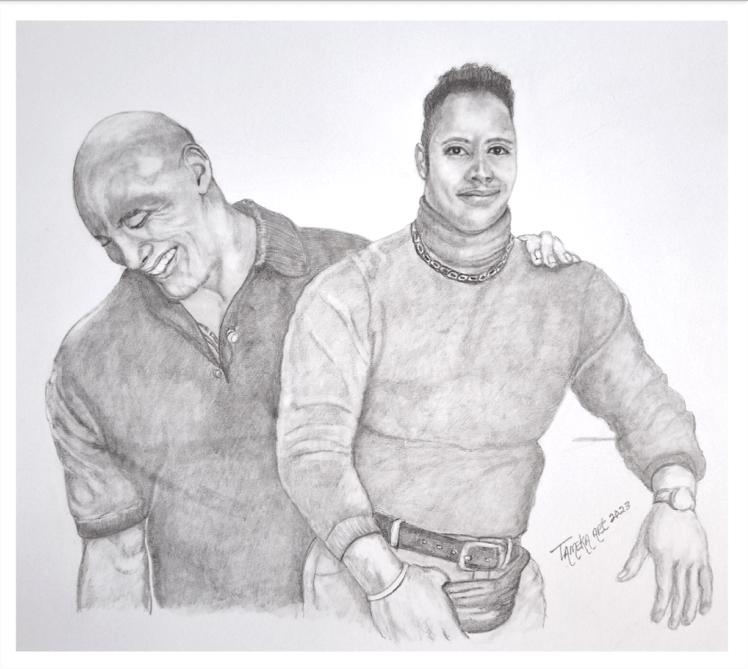
 Tameka Art