Believe Like a Child; Draw Like an Artist – Tameka Art

Life became busy. Somewhere between school, work, and endless to-do lists, you stopped drawing. The decision did not come from a lack of talent. It happened quietly, as other responsibilities started to feel more urgent and more important.

This course is a gentle way back to that creative part of you.

Believe Like a Child; Draw Like an Artist is a self-paced online drawing course for adults and teens who want to start, or restart, drawing in a way that feels calm, encouraging, and manageable. The lessons rebuild your skills from the ground up with simple tools: lines, shapes, light, and space. At the same time, the practice of drawing gives your mind something it rarely receives in modern life: quiet, focused time to create.

Drawing becomes more than a skill. It becomes a small, steady ritual that feels almost therapeutic.

When you sit down to draw, you give yourself permission to:

  • slow down and breathe, one line at a time
  • feel grounded and present, instead of scattered and rushed
  • reconnect with the version of yourself that believed you could draw

As you move through the course, you do not guess and hope that a drawing “turns out.” You follow a clear, step-by-step system that makes drawing feel understandable and repeatable.

You will learn how to:

  • Use the grid method to train your eyes and place lines accurately, so proportions stop feeling like guesswork.
  • Practice line control and line weight to show form, value, and feeling with confidence.
  • Build any subject from basic shapes, which gives your drawings solid structure and balance.
  • Use positive and negative space to check accuracy and correct mistakes in a calm and encouraging way.
  • Bring everything together with simple 3D forms, light direction, shadows, and one-point perspective, so your drawings look solid and believable.

Each lesson includes:

  • clear, beginner-friendly instruction in everyday language
  • guided steps that train you to “see like an artist,” so you know what to look for on the page
  • short practice options (5, 15, and 30 minutes) that fit a busy life
  • small, confidence-building tasks that help you notice progress early and often

Over time, this course can feel like a form of gentle art therapy. When you draw, your breathing slows, your attention narrows, and your mind receives a break from constant noise and distraction. You express thoughts and feelings that do not always come out in words. You create something that exists purely because you chose to make it.

By the end of the course, you finish with more than a handful of drawings. You finish with a repeatable process that you can return to whenever you want to feel calmer, more focused, and creatively alive.

If any part of you still believes that you can draw, Believe Like a Child; Draw Like an Artist is here to prove that part right.

Stay in the Driver Seat: How to Work with AI Without Losing Your Voice – Tameka Art

Stay in the Driver Seat: How to Work with AI Without Losing Your Voice

AI can be useful. AI can also be loud. If you are not careful, the tool can start steering your message. That is why the most important skill with AI is not “prompting.” The most important skill is staying true to yourself while you use it. You are not a passenger in an AI conversation. You are the starter, the guide, and the final editor.

AI is a Tool, not a Truth Machine

AI predicts words. It does not “know” your life, your values, or your intentions unless you teach it. Even then, it can still guess wrong. So, you must treat AI like a helper in your studio.

  • A helper can offer options.
  • A helper can save you time.
  • A helper cannot replace your judgment.
Original drawing

You are the Generator of the Conversation

AI does not wake up and decide what you should say. You decide the goal, the tone, and the limits. If you want the final message to sound like you, then you must stay involved in the process. This means you do not just accept the first answer. You question it. You shape it. You correct it.

You are Responsible for Authorizing the Result

This part matters. Even when AI gives you “a great answer,” you are still the one who posts it, shares it, sends it, or publishes it. This means you own the outcome. Before you use any AI output, ask:

  • Is this true?
  • Is this clear?
  • Does this match my values?
  • Does this sound like me?
  • Would I say this out loud to a real person?

If the answer is no, revise it. If the answer is “I am not sure,” verify it.

A Real Example from My Art Process

In my short video, you can see what I mean.

From drawing to AI generated

The clip shifts from a graphite drawing to a full-color image with a peaceful lake and mountain scene. The result still feels connected to the artist’s hand, not like a random image that replaced my work. This result happened because I stayed involved. I wrote prompts that told AI what I wanted generated even down to the background scenery. I did not allow AI to take over and replace my work. I used my original drawing to guide the result. AI was treated like a tool that could support my vision, not a tool that could erase it. My point is this: AI can assist your message, but it should not steal your message.

How to Ask Better AI Questions so You Stay in Control

Many people get weak answers because they ask weak questions. They say, “Write a blog post about AI,” and the tool fills in the blanks with guesses. Try this process instead.

1) Start with your intention

Write one sentence first:

  • “I want to encourage readers to stay true to themselves while using AI.”

That sentence is your anchor. Return to it every time the tool drifts.

2) Give AI a role

Roles help AI stay focused:

  • “Act like a writing coach. Ask me questions before you write.”
  • “Act like an editor. Fix clarity and keep my tone.”

3) Set guardrails

Guardrails protect your voice:

  • “Do not add facts I did not give you.”
  • “Use simple language.”
  • “Keep the tone encouraging and honest.”
  • “If something is unclear, ask me.”

4) Ask for options, not one answer

Options keep you in charge:

  • “Give me 5 headline options.”
  • “Give me 3 openings with different moods.”
  • “Give me 2 endings: one short, one emotional.”

How to Push Back When AI Is Unclear

Pushing back is not rude. It is responsible. Use direct sentences like these:

  • “That is unclear. Rewrite it in simpler words.”
  • “List your assumptions in bullet points.”
  • “Ask me 3 questions before you continue.”
  • “Give me an example and a non-example.”
  • “Show me the steps you used to reach this conclusion.”
  • “Remove any claims you cannot support with evidence.”
  • “That does not sound like me. Rewrite it in my voice.”

If the draft still feels fuzzy, the problem is not you. The problem is the draft. Keep editing.

A Simple “AI Integrity Checklist” Before You Publish

Run this checklist every time:

  1. Truth: I can stand behind every claim.
  2. Voice: This sounds like me, not like a generic internet post.
  3. Clarity: A 14-year-old can understand it.
  4. Purpose: This supports my real intention.
  5. Responsibility: I reviewed it and approved it on purpose.

Final Thought: Stay Involved with Your Message

AI can help you move faster, but speed is not the goal. Trust is the goal. Integrity is the goal. Your voice is the goal. Stay in the driver seat. Let AI assist your process but let your values lead the work.

Be encouraged.

Consistency Turns Practice into Confidence – Tameka Art

Over the past several days, we have talked about belief, permission, ability versus skill, starting small, and practicing without pressure. Today, I want to focus on what naturally grows when you keep showing up. Confidence.

Confidence does not appear all at once. Confidence is built quietly through repetition. Each time you practice, your eyes learn more. Your hands feel steadier. Your mind becomes calmer.

Short, regular practice sessions help your brain and hands work together. Drawing for ten minutes each day builds more confidence than drawing for one hour once a week. Consistency removes fear because your mind begins to recognize the process. The blank page no longer feels unfamiliar. The pencil feels more comfortable. You begin to trust yourself. Tools like the grid make consistency easier.

The grid gives your practice a clear starting point. You do not need to decide what to draw next. You choose one square and begin. Over time, this simple habit builds focus and control. To support your practice, I am sharing two free tools again today.

First, here is the short video that shows how to use the grid step by step. This video will help you understand how the grid trains your eyes to see shapes, spacing, and placement.

You may watch the video here: https://youtu.be/ofQeiU7kPwA

Second, here is the free 16-square drawing grid that you can download and print as often as you like. You may download the grid here:

These tools are educational in nature. They do not promise artistic results or outcomes. Everyone learns at a different pace. Their purpose is to support observation, practice, and confidence.

If you have missed a day or felt discouraged, this post is your reminder that progress does not require perfection. What matters is returning to practice.

One square today builds confidence for tomorrow.
Another square strengthens your ability to see and draw.

If you would like continued guidance and structured lessons that build confidence through consistency, my beginning drawing course provides step by step instruction focused on fundamentals.

You can learn more about the course here:
https://www.tamekaart-lessons.com/home

Confidence grows from showing up consistently.

Keep practicing.
Keep learning.
And trust that your confidence will follow.

Be encouraged. You got this!

Progress Comes from Practice, Not Pressure – Tameka Art

Over the past few days, we have talked about belief, permission, ability versus skill, and starting small. Today, I want to focus on what helps growth to happen over time. Practice.

Many people believe that improvement comes from long sessions or perfect drawings. In reality, progress comes from consistent and gentle practice. Small actions repeated over time create real change. So, tools like the grid matter so much.

The grid helps remove pressure. It gives your eyes a place to rest and your mind a clear focus. When you work one square at a time, drawing feels less overwhelming and more manageable.

Practice does not mean rushing. Practice means showing up regularly with patience and curiosity. To help you practice with confidence, I recorded a short video that shows how to use the grid step by step. In the video, I explain how the grid helps you slow down, observe carefully, and draw what you see instead of what you think you see.

You may watch the video here:
https://youtu.be/ofQeiU7kPwA

Along with the video, I am also offering a free 16-square drawing grid that you can download and print as many times as you need. This grid is meant to be used again and again as you practice.

You may download the grid here: Download the 16-Square Drawing Grid PDF

This resource is educational in nature. It does not promise artistic results or outcomes. Everyone learns at a different pace. The purpose of the grid is to support observation, consistency, and confidence.

Here is something important to remember:

You do not need to practice perfectly.
You do not need long sessions.
You only need consistency.

One square today is enough.
Another square tomorrow is progress.

If you would like guided lessons that build on this practice and teach the fundamentals step by step, my beginning drawing course provides clear instruction and encouragement for each stage of learning.

You can learn more about the course here:
https://www.tamekaart-lessons.com/home

Practice is not about pressure. It is about presence.

Keep showing up.
Keep practicing.
And trust the process.

Be encouraged.

Fear Shrinks When You Start Small – Tameka Art

Over the past few days, we have talked about belief, permission, and the difference between ability and skill. Today, I want to talk about something that quietly stops many people from learning to draw. That thing is fear.

Fear often appears as hesitation. It shows up as a blank page and a pencil that never touches the paper. Fear tells us that we might fail or that our drawing might not look right.

Fear grows when the task feels too big.

One of the most helpful ways to move past fear is to start small. Artists do not begin by trying to draw everything at once. They break the image down into smaller parts. When the task becomes smaller, fear becomes quieter. This is where an important drawing tool comes in. The grid.

A grid helps you see like an artist. It divides a drawing into manageable sections so your eyes can focus on one small area at a time. Instead of worrying about the entire picture, you only focus on one square. One square feels possible. One square feels safe. One square invites action.

Using a grid teaches your eyes to notice shapes, angles, and placement. It also helps your mind slow down. Fear loses strength when your attention has a clear direction.

To support you as you begin, I am offering a free 16-square drawing grid that you can download and print as many times as you need. You may access your grid here:


This grid is designed to help you practice drawing in small, focused steps. You do not need to fill every square at once. You only need to choose one square and begin.

This free resource is educational in nature. It does not promise artistic results or outcomes. Everyone learns at a different pace. The purpose of this tool is to support observation, practice, and confidence.

If you have been feeling nervous about starting, let this post serve as your encouragement today. You do not need to be fearless. You only need to be willing to take a small step.

If you would like more guidance on how to use tools like the grid and learn the fundamentals step by step, my beginning drawing course provides clear and supportive instruction.

You can learn more about the course here: https://www.tamekaart-lessons.com/home.

Fear does not disappear all at once. It fades when action begins. Start small. Choose one square. Let your pencil move. You are learning. You are growing. And you are capable.

Be encouraged.

You Have the Ability: Skills Are Learned – Tameka Art

In the past two days, we have talked about belief. We talked about how children confidently believe they can draw. We talked about giving yourself permission to begin again.

Today, I want to talk about an important difference that often gets overlooked. This difference is ability versus skill.

Ability is the potential to do something. Skill is something that is learned through practice, guidance, and time. Many adults believe that if they do not already have skill, then they must not have ability. This belief is simply not true.

When children raise their hands and say they can draw, they are not claiming mastery. They are claiming ability. They are saying, “I am allowed to try.”

As adults, we often reverse this thinking. We tell ourselves that we must already know how to draw before we begin. This mindset can stop creativity before it ever starts.

Drawing is not a talent that only a few people are born with. Drawing is a skill that grows when ability is given structure and support. Skills develop through clear instruction and steady practice.

Reframing your mindset starts with one simple truth: You already have the ability to draw.

Learning how to draw is the process of turning that ability into skill. This is why beginner drawing instruction matters. Clear steps help remove confusion. Simple exercises help build confidence. Supportive guidance helps you stay encouraged as you learn.

You do not need to be good before you begin. You need to begin to improve. If you worked through the free drawing guide I shared yesterday, you may have noticed something important. The guide does not ask you to be perfect. It asks you to observe, practice, and stay curious. This is how skills are built. Download the guide:  Kick Start Your Drawing Journey – Google Docs

If you would like to continue learning in a structured and supportive way, my beginning drawing course expands on these ideas. The course focuses on fundamentals such as placement, simple shapes, line control, and observation. Each lesson is designed to help you grow skill while protecting your confidence. You can learn more about the course here:
https://www.tamekaart-lessons.com/home

This course is educational in nature. It does not promise artistic results or outcomes. Each student progresses at a different pace. The purpose of the course is to teach foundational skills and encourage consistent practice.

Here is what I want you to remember today.

You do not lack ability.
You are not behind.
You are learning a skill.

When you separate ability from skill, learning becomes lighter and more hopeful. You give yourself room to grow without judgment.

You can continue.
You can learn.
And you can enjoy the process.

Be encouraged.

You Still Can Draw. Here Is a Simple Way to Begin – Tameka Art

Yesterday, I shared a story about asking my kindergarten class, “Who in here can draw?” Almost every student raised their hand. They believed they could draw because they trusted their creative ability. This belief did not come from training or experience. It came from confidence and curiosity.

As adults, many of us lose that confidence. We begin to think that drawing is only for people with talent or years of practice. We hesitate to begin because we do not know where to start. But learning to draw does not begin with perfection. It begins with permission.

Permission to try.
Permission to learn.
Permission to begin again.

If you felt encouraged by yesterday’s post, I want to offer you a small and supportive next step. I created a free drawing guide to help you begin without pressure or overwhelm.

This guide is designed to:

  • Help you reconnect with your creative confidence
  • Show you how to start drawing in a simple, clear way
  • Encourage you to focus on progress instead of perfection

You do not need special tools. You do not need experience. You only need the willingness to take one step forward.

You may access the free drawing guide here:
https://docs.google.com/document/d/e/2PACX-1vQCQUrEz8ocXfPMOcCPyqWFUbyKJi7aZyOIAGGfFnKG7_qFtA9JNST8xjXnUMYnwGmpo8BqY4cwlbKI/pub

This guide is educational in nature. It does not promise results or artistic outcomes. Everyone learns at a different pace. The purpose of this guide is to support your learning and encourage your creative growth.

If you enjoy the guide and feel ready to go deeper, I also offer a full beginning drawing course that teaches the fundamentals step by step in a clear and supportive way.

You can learn more about the course here: https://www.tamekaart-lessons.com/home

Remember this: the belief that you could draw as a child is still inside you. It has not disappeared. It is waiting for you to give it space again.

You can begin again. You can learn to draw. And you can enjoy the process along the way.

Be encouraged.

Rediscover Your Creative Belief and Learn to Draw – Tameka Art

When I asked my kindergarten class, “Who in here can draw?” almost every student raised their hand. Their belief was clear and confident. Every child believed deep in their heart that they had the ability to draw. I want you to notice something important about that moment. I did not ask them who knows how to draw. I specifically asked who can draw.

The children instantly knew that they had creative ability. Their belief was palpable. It filled the room. It was not about technique or skill yet. It was about belief in their own creativity and imagination.

As adults, many of us lose that belief somewhere along the way. We begin to ask ourselves questions like “Am I good enough?” or “Do I have talent?” These questions can slow us down and silence our creative spark.

But what if we could go back to that belief we had in kindergarten? What if we believed again that we can draw?

I want to invite you to rediscover that core belief. To remember what it felt like to trust your creative ability. You do not need to compare yourself to anyone else. You need to take one step forward and allow yourself to learn again.

Learning to draw is not about perfection. It is not about being the best. It is about expression. It is about telling your story with lines on a page. This is why starting with drawing for beginners is such a powerful first step. Many people search for simple, clear guidance like basic drawing for beginners and pencil drawing for beginners when they want to learn to create again.

When you learn to draw step by step, you do more than learn a skill. You open a door back to that creative belief that once lived in your heart. You give yourself permission to play. To explore. To be curious again.

I want to offer you a safe and supported space to take that first step. I have created a course that is designed for people who are ready to rediscover their creative confidence and learn the basics of drawing in a clear and friendly way. You may visit the website for my beginning drawing course here: https://www.tamekaart-lessons.com/home.

In this course, we will begin with the fundamentals. You will learn how to start drawing from the very beginning. You will learn how to build confidence with simple shapes. You will see that drawing is not something only a few people can do. It is something that anyone can grow into, step by step.

There is no judgment here. There is only encouragement, inspiration, and empowerment. I want you to feel supported as you explore your own creative path.

Remember your kindergarten moment. That belief that you could draw simply because you can. This belief is still inside of you. It is not lost. It is waiting to be rediscovered.

You can begin again. You can learn to draw. And you can enjoy the process along the way. Be encouraged and sign up today.

The Safest and Most Productive Way to House Traditional Art as a Digital Asset – Tameka Art

A calm, clear toolkit for artists who want to be ready for the digital future.

Traditional art is real art. Pencil, paint, paper, and canvas still matter. The world is also moving deeper into digital display. Many homes already use digital frames. Many galleries already use screens. More space will follow. Your goal does not need to be hype. Your goal can be readiness.

This blog post explains the safest and most productive path to “housing” your traditional art as a digital asset. It also explains how to sell digital versions with clarity. Tokenization, including NFTs, is included as one option.

Transparency and safety note

This article is educational. This article is not financial, legal, or tax advice. Platforms, fees, and policies can change. No method can guarantee sales, profit, or audience growth. Digital files can be copied. Security habits reduce risk, but no system removes all risk.

Step one: Understand what “digital asset” really means

Many people use the phrase “digital asset” as if it is one thing. It is not one thing. For artists, a digital asset usually includes three parts:

  1. The art file
    This is the image or video. An image or a video that displays on a wall screen.
  2. The rights and terms
    An agreement. The right terms explain what the buyer can do with the file.
  3. The ownership record
    The proof trail. The ownership record shows that a sale or transfer happened.

Keep in mind that an NFT can help with the ownership record, but an NFT is not the same as the art file. An NFT is also not the same as copyright. Clear terms still matter.

The safest and most productive path is a “Digital Asset Stack”

If you want safety, you need a layered system. One platform is never enough.

Layer A: Create a clean digital master

A digital master is your best file. A digital master is not a social media upload.

Basic method

  • Photograph or scan the artwork in high quality
  • Save one master file for archiving
  • Save one sharing file for posting and emailing

Simple tips that help

  • Use even lighting and reduce glare
  • Keep the camera parallel to the artwork
  • Crop and straighten gently
  • Do not over-filter the image

Helpful tip: A weak photo creates a weak digital future. A clean master file makes every future option easier.

Layer B: Back up your art with a real safety system

A safe system is used in more than one place.

A simple standard is the 3–2–1 approach:

  • 3 copies of important files
  • 2 different types of storage
  • 1 offsite copy

Example setup

  • Copy 1: Your computer
  • Copy 2: External hard drive
  • Copy 3: Cloud storage

Remember: Social media is not storage. Social media is for discovery. Accounts can be locked. Files can be compressed. Metadata can be removed. Safety comes from backups.

Layer C: Build identity signals that travel with your work

When your art goes digital, your name must be easy to verify.

Good identity signals

  • A simple website or portfolio page with your name and your work history
  • A consistent artist name across platforms
  • A clear contact method for collectors and galleries
  • A public page that shows your official links

Some artists also explore provenance tools that attach “content history” to images. These tools can help, but they are not perfect.

Helpful tip: Many platforms re-save images. Some platforms remove metadata. Do not depend on metadata alone. Identity needs more than one signal.

Layer D: Keep an “Artwork Ledger”

An Artwork Ledger is a simple record you keep. A spreadsheet works.

Include these columns

  • Title
  • Date created
  • Medium and size
  • Master file location
  • Backup locations
  • Edition size (1 of 1, 1 of 10)
  • Sale date
  • Buyer name or order number
  • Rights granted to the buyer
  • Notes

Helpful Tip: People chase complicated tools and forget this simple habit. A good ledger protects you in real-world disputes and digital confusion.

Best platforms to house traditional art, based on the job

There is no single best platform for everything. There is a best platform for each job.

1) Best platforms for daily “studio storage”

These platforms help you access files, share files, and stay organized.

  • Google Drive
  • Dropbox
  • OneDrive

What to look for

  • Easy folder organization
  • File sharing controls
  • Version history
  • Two-factor authentication

Keep in mind: A strong password is not enough. Two-factor authentication matters. Do not skip it.

2) Best platforms for “backup and archive”

These platforms focus on safety and redundancy.

  • External hard drives for local backup
  • Cloud backup services for offsite backup
  • Archive storage options for long-term preservation

What to look for

  • Automatic backup
  • Clear restore process
  • Separate “vault” from your daily work folders

Helpful tip: Artists often store everything in one place. This habit creates a single point of failure. A vault protects your future.

3) Best platforms for public display and discovery

These platforms help people find you.

  • Your website
  • Portfolio platforms
  • Social media

Keep in mind: Discovery platforms change fast. Use them, but do not trust them to store your only copy.

The role of tokenization in sales, transfers, and ownership records

Tokenization is a way to create a record of ownership for a token. NFTs are a common type of tokenization.

Here is a simple analogy:

  • The art file is the book.
  • The token is the library card number.
  • The blockchain record is the log that shows who checked the book out and when.

What tokenization can do well

  • It can record a public trail of token transfers.
  • It can support marketplace trading for people who want that system.
  • It can create a clear “token record” that is time-stamped.

What tokenization does not automatically do

  • It does not stop copying. Screenshots still exist.
  • It does not prove the minter is the real artist.
  • It does not automatically transfer copyright.
  • It does not guarantee royalties on every resale.

Keep in mind: Many people were taught that NFTs guarantee royalties forever. Receiving a royalty fee on ever sale is not a safe promise. Marketplace policies and buyer behavior can change. Some platforms enforce creator fees differently. Some do not enforce them at all.

The best way to sell traditional art as a digital asset

The best method depends on your goal. Here are three clear paths. NFT is only one path.

Path 1: Sell a digital edition with clear terms (NFT not required)

This path is often the safest starting point for beginners.

What you sell

  • A digital file that the buyer can display
  • A license that explains what the buyer can do
  • A certificate of authenticity file, if you want one
  • A receipt and an updated ledger entry

What makes it strong

  • You control the storefront
  • Buyers do not need a wallet
  • You can keep your system simple and secure

Good fits for this path

  • Artists who want a calm start
  • Collectors who want an easy purchase
  • Artists who want fewer scam surfaces

Remember: Digital files are copyable. Scarcity comes from edition rules you enforce, not from the file itself.

Path 2: Sell the physical artwork with a digital companion file

This path works well for traditional art.

What you sell

  • The original artwork
  • A high-quality digital file for the buyer to display digitally
  • A certificate that links the physical piece and the digital file

Why it works

  • The buyer gets a real object
  • The buyer also gets digital display rights
  • You keep the story connected to your physical work

Helpful tip: A buyer may assume the digital file includes commercial rights. Put your terms in writing. Clarity protects both sides.

Path 3: Sell a tokenized certificate or digital edition (NFT as an option)

Art as a digital edition is where NFTs can be useful. The NFT acts like a transferable record for a token.

What you sell

  • A token that points to the artwork metadata
  • A clear description of what the buyer receives
  • Optional perks, if you want to build a collector experience

When this path is productive

  • You want a public transfer record for the token
  • You want a marketplace-based collector culture
  • You have strong wallet safety habits

Keep in mind: This path is not safer by default. This path adds wallet risk. Beginners can lose access through phishing and fake links. Security training must come before tokenization.

The safest “best path” for most traditional artists

1) Make a clean digital master

2) Build a backup system with redundancy

3) Build identity signals and keep an Artwork Ledger

4) Start selling digital editions with clear terms

5) Add tokenization only when it matches a clear goal

This plan prepares artists for digital walls, digital galleries, and digital collectors. It also prepares artists for a future where identity and secure signing matter.

A short security lesson you can repeat often

Digital ownership systems depend on access. Access depends on keys and passwords.

Safety rules

  • Never share a seed phrase.
  • Never trust urgent messages that push you to click fast.
  • Bookmark official links.
  • Use two-factor authentication.
  • Use a separate wallet for experiments, if you choose NFTs.

Helpful tip: People lose assets through scams more often than through “bad art.” A safe artist learns slowly and stays steady.

Encouragement for artists who feel overwhelmed

You do not need to do everything at once. You only need the next right step.

Start with the master file. Build your vault. Write down your ledger. Then choose the selling path that matches your goals.

Your traditional art is valuable. Your story has value. A digital system can help you carry that value into the future with more clarity and control. So, let us make this new year safe, productive, and profitable for us all.
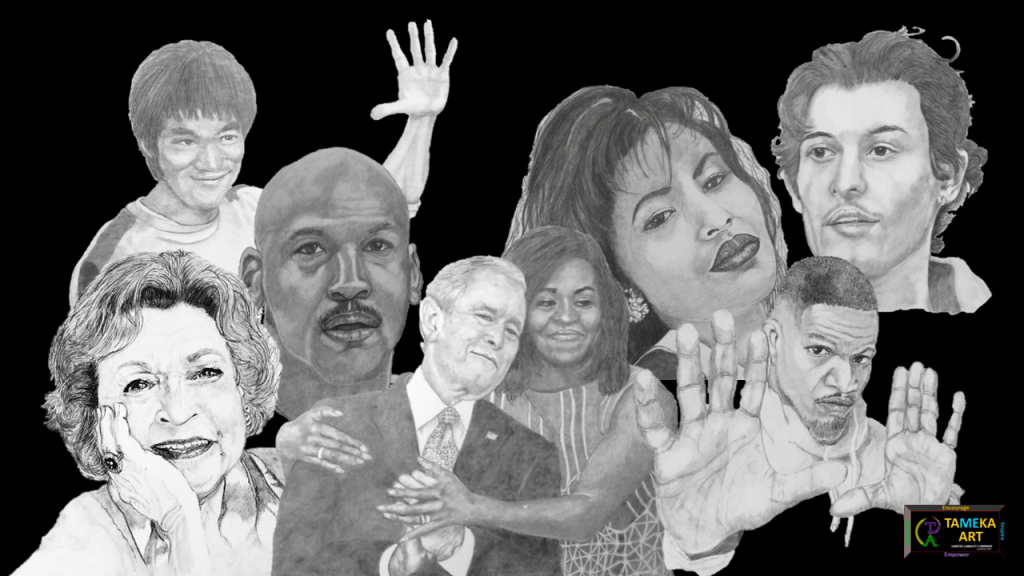
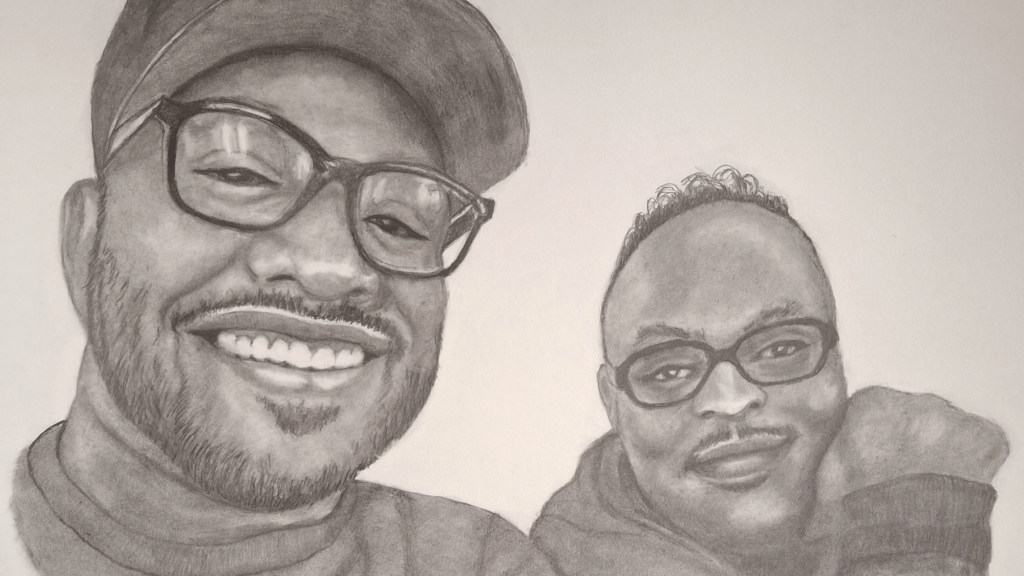
In a world of screenshots and copies, how do you prove which artwork is truly yours? – Tameka Art

Turn your art to a one-of-a-kind digital asset safely

When your art is sold or traded on a blockchain, it creates a permanent, time-stamped record of ownership and activity. This transparent record helps prove what happened and when, which builds trust, supports provenance, and offers an extra layer of protection for your artwork in the digital world.